
Guided Product Discovery: How Quizzes Replace Search Bars for Complex Product Catalogs

Shopping online gets messy when you're staring at hundreds of similar products. That little search bar at the top of the page? It's becoming less helpful by the day. Most shoppers can't describe what they need in technical terms, and nobody wants to spend twenty minutes clicking through endless filter options.
Interactive quizzes are changing this. Instead of making customers decode complicated catalogs, quizzes ask simple questions and guide them straight to products that actually fit their needs. Think of it as having a knowledgeable sales associate helping you shop, except it's automated and available 24/7.
Why Traditional Shopping Methods Don't Work Anymore
Too Many Choices Create Shopping Anxiety
Studies show that excessive choice reduces purchase likelihood rather than increasing it. When a skincare brand displays forty moisturizers, shoppers don't feel excited—they feel overwhelmed. Grid layouts force customers to evaluate dozens of options simultaneously, which turns shopping into an exhausting mental workout that most people simply quit.
High-stakes purchases make this worse. Buying the wrong electronics or supplements means wasted money and potential problems, so the pressure to choose correctly actually freezes people in place.
Customers Don't Speak Your Technical Language
Here's the reality: shoppers don't know your industry jargon. Someone looking for wireless earbuds might not understand "active noise cancellation" versus "ambient sound mode." A vitamin shopper probably can't tell chelated minerals from standard formulations. This creates a massive disconnect between how stores organize products and how real people think about their needs.
Search bars demand precision, but customers offer vague descriptions. They type "something for dry skin" when the site needs "ceramide moisturizer" to return results. The system sees a failed search; the customer assumes you don't carry what they need—even when the perfect product exists three clicks away.
Search Bars Fail More Often Than You Think
Most eCommerce search functions require exact matches. Misspellings, synonyms, and everyday language often produce zero results despite available inventory. Someone searching "running shoes for flat feet" finds nothing if products are only tagged as "stability running shoe" or "overpronation support."
The dreaded "no results found" page kills sales. Some customers rephrase their search, but research indicates that 68% of users will leave a site after a failed search rather than try different terms.
Filter Systems Overwhelm Rather Than Help
Filters seemed brilliant in theory. In practice, they create different frustrations. Selecting five filters across categories—price, size, color, material, features—and still seeing thirty products feels pointless. Many filter combinations yield zero results, forcing tedious trial-and-error experimentation.
Filters also assume customers understand which attributes matter. A first-time air purifier buyer doesn't necessarily know whether CADR rating or room coverage should drive their decision.
What Makes Quizzes Better for Product Discovery
Quizzes solve these problems by working the way people actually think. The approach transforms product discovery eCommerce from a guessing game into a guided conversation.

Speaking Customer Language, Not Technical Specs
Quizzes translate plain English into product specifications. Instead of asking shoppers to search for "hyaluronic acid serum," a quiz asks "Does your skin feel tight after cleansing?" Answers to these straightforward questions map directly to product attributes without requiring expertise.
This removes the burden of knowledge from shoppers and places it where it belongs—on the brand. The quiz processes customer input through professional product knowledge and delivers matches based on actual suitability.
Breaking Decisions Into Manageable Steps
Rather than showing everything at once, quizzes guide customers through sequential questions. Each one eliminates some possibilities while keeping others in play. This staged approach prevents paralysis and provides psychological relief through visible progress toward an endpoint.
Teaching While Shopping
Good quizzes educate as they collect information. Questions and answer options explain concepts and help customers understand what matters for their situation. A mattress quiz might explain that side sleepers need more pressure relief than back sleepers, teaching while gathering data.
This builds confidence in recommendations. By the results page, customers understand why these specific products suit them—the recommendation feels earned rather than arbitrary.
Getting Better Completion Rates
Interactive formats hold attention better than browsing. Quizzes typically achieve completion rates between 45-65%, significantly higher than standard product page engagement. Once someone answers three or four questions, they're psychologically invested in seeing personalized results.
When Quizzes Work Best
Not every store needs a quiz, but certain situations benefit enormously:
Complex technical products like electronics or industrial equipment require understanding compatibility and specifications that aren't intuitive. Quizzes bridge the knowledge gap by asking about needs rather than technical requirements.
Personalized solutions, including supplements, skincare, and wellness products, depend heavily on individual circumstances. Generic recommendations miss the mark, while quiz-based matching dramatically improves relevance.
Large catalogs with 100+ products create choice overload. Quizzes transform variety from overwhelming liability into personalized strength.
Expensive purchases require confidence that's hard to build through browsing alone. The structured quiz approach demonstrates careful consideration appropriate for significant investments.
Building Quizzes That Actually Work
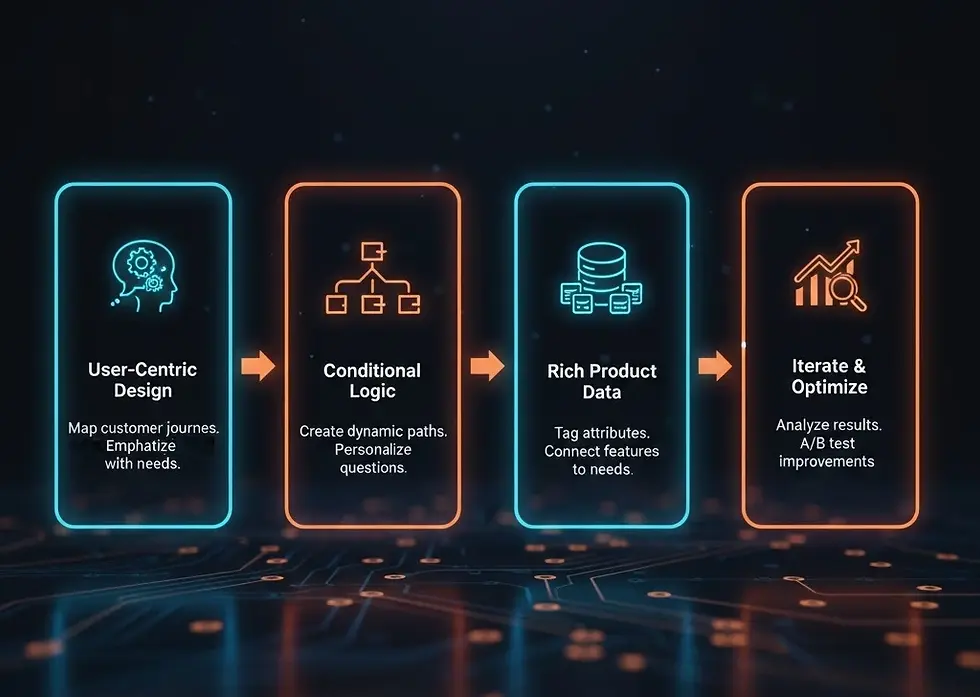
Creating effective product discovery tools requires strategic thinking about both customer experience and technical execution.
Start With Problems, Not Products
The first question sets everything up. "What type of solution are you looking for?" assumes customers already understand products. Better approaches focus on goals or challenges: "What brings you here today?" or "Which problem are you solving?"
Keep It Simple But Thorough
Effective quizzes contain 5-7 questions—enough to make accurate recommendations without exhausting patience. Each question should serve a clear purpose. The language needs to stay accessible throughout, with brief explanations for any necessary technical terms.
Use Visuals for Style-Based Products
For fashion, home décor, or design-focused items, showing images dramatically improves engagement. Customers might not describe their style as "mid-century modern," but they'll immediately recognize and select it when shown pictures.
Build Trust Throughout the Journey
Progress indicators and reassuring copy maintain engagement. Simple touches like "Based on your answers, we're narrowing matches" signal that the system values their input and is actively working to help them.
Shopify Quiz Integration
Specialized apps connect quiz logic to product catalogs through tagging systems, enabling sophisticated matching without custom development. The quiz reads product tags like "sensitive-skin" or "budget-friendly" and serves recommendations based on how responses align with those attributes.
Strategic placement matters significantly. Homepage features work for quiz-first brands, while category page alternatives—"Not sure which product fits? Take our quiz"—capture overwhelmed browsers at frustration points. Navigation bar integration keeps quizzes available without forcing them on everyone.
Real-World Examples
Suplibox uses extensive personalization to gather body goals, dietary preferences, and wellness priorities for customized supplement packs. The quiz explains the reasoning behind each inclusion, building customer confidence.

Mario Badescu's skin analysis guides customers through identifying skin type and concerns, then recommends specific products and offers free samples. Both show how quizzes elevate product discovery into genuine consultation experiences.

Making Recommendations Work Behind the Scenes
Effective matching depends on comprehensive product tagging—use cases, benefits, user types, compatibility factors. A single product might carry twenty tags describing what it is and who it's for.
Smart algorithms assign weighted scores rather than simple yes/no matches. Allergies might completely eliminate products, while preferences influence ranking without serving as absolute filters. This nuance allows showing the best available options even when perfect matches don't exist.
Inventory integration prevents recommending out-of-stock items—the most frustrating possible outcome. Real-time checking ensures recommendations stay current and achievable.
Transform Your Shopping Experience
Visual Quiz Builder connects seamlessly with Shopify catalogs through smart tagging and matching algorithms. Merchants launch intuitive recommendation experiences without technical expertise, reducing returns and increasing satisfaction by helping shoppers find the right products initially.
For stores seeing high bounce rates or feedback about navigation difficulty, implementing quizzes often provides immediate improvements in engagement and conversions.
Frequently Asked Questions
How do quiz conversion rates compare to regular search?
Quizzes typically convert 2-3 times better than traditional search for complex products, though they work best alongside search rather than replacing it entirely.
How many questions should I include?
Between 5-12 questions hits the sweet spot—thorough enough for accuracy without testing patience. Completion rates drop notably after 15 questions.
Can quizzes handle thousands of products?
Absolutely. Large catalogs benefit even more because navigation challenges are more severe. Proper tagging and algorithms make size irrelevant.
Should I remove my search bar?
Never. Different customers have different preferences. Some know exactly what they want; others need guidance. Offer both options prominently.


