
Using Quiz Data to Predict Customer Lifetime Value Before First Purchase: AI Customer Insights
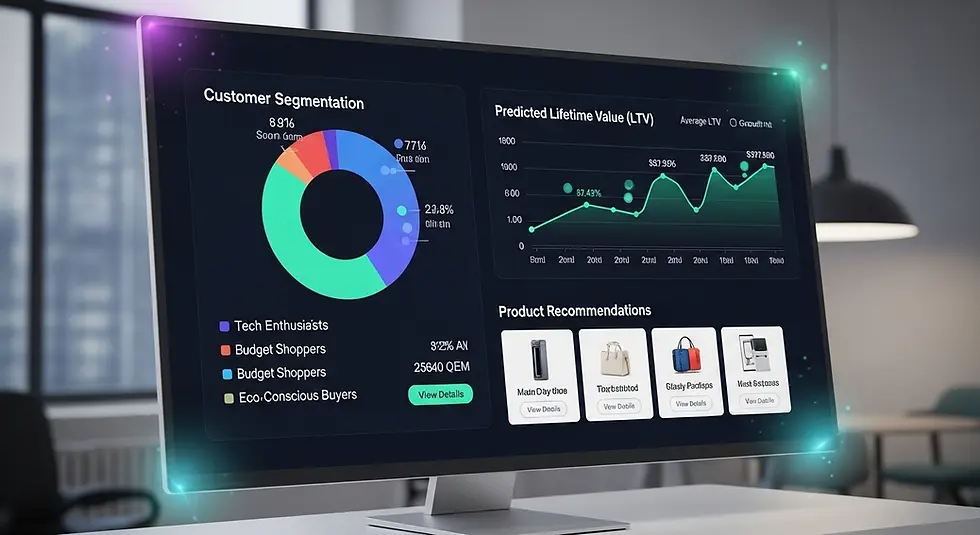
Most online stores make a costly mistake: they wait until someone buys multiple times before figuring out how valuable that customer might be. By then, acquisition budgets have been spent without any strategic targeting. The smarter approach? Predict customer value before the first transaction even happens.
Ecommerce predictive analytics now goes far beyond analyzing past purchases. Brands are using interactive quizzes to collect zero-party data—information customers willingly share—that reveals spending potential from the first click. This isn't theoretical. Companies using this method report 40-60% better acquisition efficiency within three months.
Product recommendation quizzes gather insights that cookies and browsing behavior simply can't match. When someone tells you directly what they need, how much they'll use it, and what problems they're solving, you're working with gold-standard data. Traditional analytics tools need months of purchase history to reach the same level of insight.
Who's winning right now? Businesses that are segmenting audiences, personalizing experiences, and allocating marketing dollars based on predicted value—all before checkout.
What Customer Lifetime Value Actually Means
The CLV Calculation That Matters
Customer Lifetime Value represents the total expected revenue from one customer over the entire relationship. The basic formula—average purchase value × frequency × customer lifespan—sounds simple enough. Reality gets complicated fast.
Two approaches exist: historical and predictive. Historical CLV just adds up past spending. Predictive CLV forecasts future value based on patterns. For growth-focused businesses, predictions matter infinitely more than history.
Here's why this number is critical: customer acquisition costs have jumped 222% over the past eight years across most ecommerce sectors. Without accurate CLV estimates, brands either waste money on low-value customers or miss opportunities with high-value ones.
The New Customer Problem
Traditional predictive analytics eCommerce models hit a wall with new customers. They need data to make predictions, but new visitors haven't generated any data yet. It's the classic catch-22.
Legacy systems depend on:
Repeat purchase timing patterns
Category browsing behavior over weeks
Support ticket frequency and types
Review activity and engagement levels
This means brands wait 3-6 months to truly understand customer value. During that gap, everyone gets treated the same regardless of their actual potential. Marketing budgets are spread evenly across wildly different customer segments.
How Machine Learning Changed the Game
AI customer insights powered by quiz data flipped the timeline completely. Instead of waiting for organic patterns to emerge, brands now engineer data collection into the pre-purchase experience.
The algorithms don't need months of purchase history when they have detailed preference profiles captured upfront. Quiz-based predictions rival the accuracy of models built on 12+ months of actual purchase data. Marketing ROI improves immediately because paid campaigns can segment by predicted value from day one.
What Makes Quiz Data Different
Zero-party data—information customers intentionally share—beats behavioral data for predictions. When someone explicitly states their needs, budget range, and usage frequency, the guesswork disappears.
Customer behavior prediction gets dramatically better when explicit preferences complement browsing patterns. Someone might browse premium products, but quiz responses reveal whether they're actually willing to pay premium prices or just researching aspirationally.
The Information Quizzes Capture
Product preference questions show how people think about selection. Do they prioritize quality over price? Are they exploring new categories or replacing something familiar? These patterns predict completely different spending trajectories.
Lifestyle context transforms raw preferences into actionable intelligence:
Daily usage versus occasional special events
Routine consistency and lifestyle stability
Current product dissatisfaction levels
Willingness to try new solutions
Pain point severity creates surprisingly accurate value indicators. Customers with urgent problems convert faster, stay longer, and explore complementary products more readily. Quiz questions quantify this motivation directly rather than inferring it from vague signals.
Budget markers appear throughout well-designed quizzes without directly asking "how much will you spend?" Questions about current spending, premium versus value preferences, and investment mindset reveal financial capacity clearly.
Quiz Signals That Forecast Customer Value
Completion Behavior Tells a Story
People who finish longer, more detailed quizzes demonstrate commitment that casual browsers lack. This completion pattern predicts both initial conversion and repeat purchases. The relationship isn't random—there's an optimal quiz length where engagement stays high while data richness peaks.
Drop-off points matter too. Someone leaving at price questions signals different concerns than abandonment during product preferences. These micro-behaviors feed CLV predictions before any purchase occurs.
Product Interest Breadth and Price Comfort
Customers exploring multiple complementary categories during quizzes signal cross-sell potential. This pattern emerges immediately, unlike purchase history, which takes months to reveal. Research shows customers with higher product category engagement deliver 30-40% higher lifetime value.
Price range selections forecast spending capacity with remarkable accuracy. Premium gravitators typically maintain those preferences across their purchasing lifetime. Budget selections similarly predict sustained value-seeking behavior.
The Urgency Factor
Questions revealing problem intensity predict loyalty better than demographics. Someone with chronic issues seeking solutions becomes a loyal buyer when products work. Health and wellness quizzes demonstrate this clearly—acute symptoms indicate a different value than casual prevention interest.
Purchase timeline questions separate high-intent prospects from maybe-someday browsers. This temporal dimension predicts conversion likelihood, retention patterns, and lifetime purchase frequency.
Building Your Prediction Model

Getting the Data Right
Quiz questions need a balance between customer experience and data value. Questions must feel natural while capturing variables that actually predict CLV. A dozen targeted questions outperform fifty generic ones that bore respondents.
Integration with Shopify, CRM systems, and email platforms transforms quiz responses into actionable profiles. Without a proper connection to purchase behavior and customer touchpoints, quiz data sits unused.
Finding What Predicts Value
Not all quiz questions contribute equally. Statistical analysis reveals which responses strongly correlate with actual CLV outcomes. Common predictors include:
Budget range indicators
Problem severity markers
Usage frequency expectations
Lifestyle consistency signals
Sometimes combinations of responses predict value better than individual answers. Advanced analysis uncovers these interaction effects that simple correlation misses.
Model Approaches That Work
Predictive analytics eCommerce models range from simple customer segments to sophisticated machine learning. The right approach depends on data volume and technical resources. Starting simple and iterating typically beats jumping straight to complex algorithms.
Segmentation models group customers by quiz patterns and assign predictions based on similar groups' historical performance. This works well without heavy technical requirements. Regression analysis and random forest algorithms handle non-linear relationships for higher accuracy but need more data and expertise.
Shopify Quizzes That Predict Value
Product quiz apps on Shopify integrate directly with customer profiles and marketing automation. This native connection transforms quiz responses into intelligence that shapes every subsequent interaction. Segmentation happens instantly, ensuring first messages already reflect predicted value.
Visual Quiz Builder enables sophisticated quizzes with conditional logic that adapts based on previous answers. Different question types—multiple choice, image selection, sliders—match format to information needs. Built-in analytics track the entire customer journey, connecting quiz data to revenue outcomes.
Real Examples of Predictive Quizzes
Semaine Health's hormone quiz demonstrates CLV prediction through supplement recommendations. The quiz captures health goals, symptom severity, and lifestyle factors that indicate subscription potential. Chronic symptoms with high solution motivation signal a dramatically different value than casual exploration.

Suplibox's supplement quiz collects body metrics, wellness priorities, and lifestyle details, predicting customization needs and price tolerance. Questions about fitness goals, current usage, and budget flexibility create comprehensive profiles forecasting ongoing engagement.

Both examples show how wellness brands distinguish one-time purchasers from high-value subscribers before transactions occur. Problem severity, lifestyle alignment, and budget signals map directly to CLV drivers that purchase history only reveals after months.
Putting Predictions to Work
Smarter Ad Spending
Allocating acquisition costs by predicted CLV transforms paid advertising economics. Campaigns targeting high-value segments justify higher bids because unit economics support elevated costs. Retargeting gets strategic—high-potential visitors see aggressive campaigns while low-value prospects receive minimal spend.
Personalized From Day One
Email sequences based on predicted value move beyond product recommendations to comprehensive experience differentiation. High-CLV prospects receive founder notes and priority service access. Product bundles reflect predicted spending capacity. Discount strategies match value segments—high-value customers often need minimal discounts since effectiveness matters more than price.
Service That Reflects Value
Routing predicted high-value customers to specialized support creates experiences justifying acquisition investments. These customers get faster responses and experienced agents. The differentiation stays invisible—everyone receives good service, but predicted high-value accounts receive exceptional service.
Start Predicting Value Today
The competitive edge belongs to businesses that segment customers before purchase, personalizing based on predicted value rather than treating everyone identically. Visual Quiz Builder captures zero-party data that traditional analytics miss, creating intelligence informing every marketing decision.
Predictive analytics eCommerce strategies built on quiz data deliver lasting advantages. The impact on acquisition efficiency and profitability compounds as models mature and personalization evolves.
Common Questions About Quiz-Based Predictions
How accurate can quiz predictions be?
Well-implemented systems achieve 65-75% accuracy in predicting which value quartile prospects fall into. This matches predictions made after 6-12 months of purchase history, but arrives before the first transaction.
Which businesses benefit most?
Companies with high acquisition costs and significant CLV variation see the strongest returns. Supplement brands, skincare, specialized apparel, and premium consumables benefit particularly well.
How many responses are needed before building a model?
Basic models emerge around 500-1000 completed quizzes with purchase data. Models mature significantly between 2000 and 5000 responses as patterns become statistically clear.
Can quizzes replace traditional analytics?
Quiz data complements rather than replaces behavioral analytics. The combination delivers better predictions than either alone, with quiz responses providing early signals and purchase history adding validation.


